Ritual & Ceremony Wares
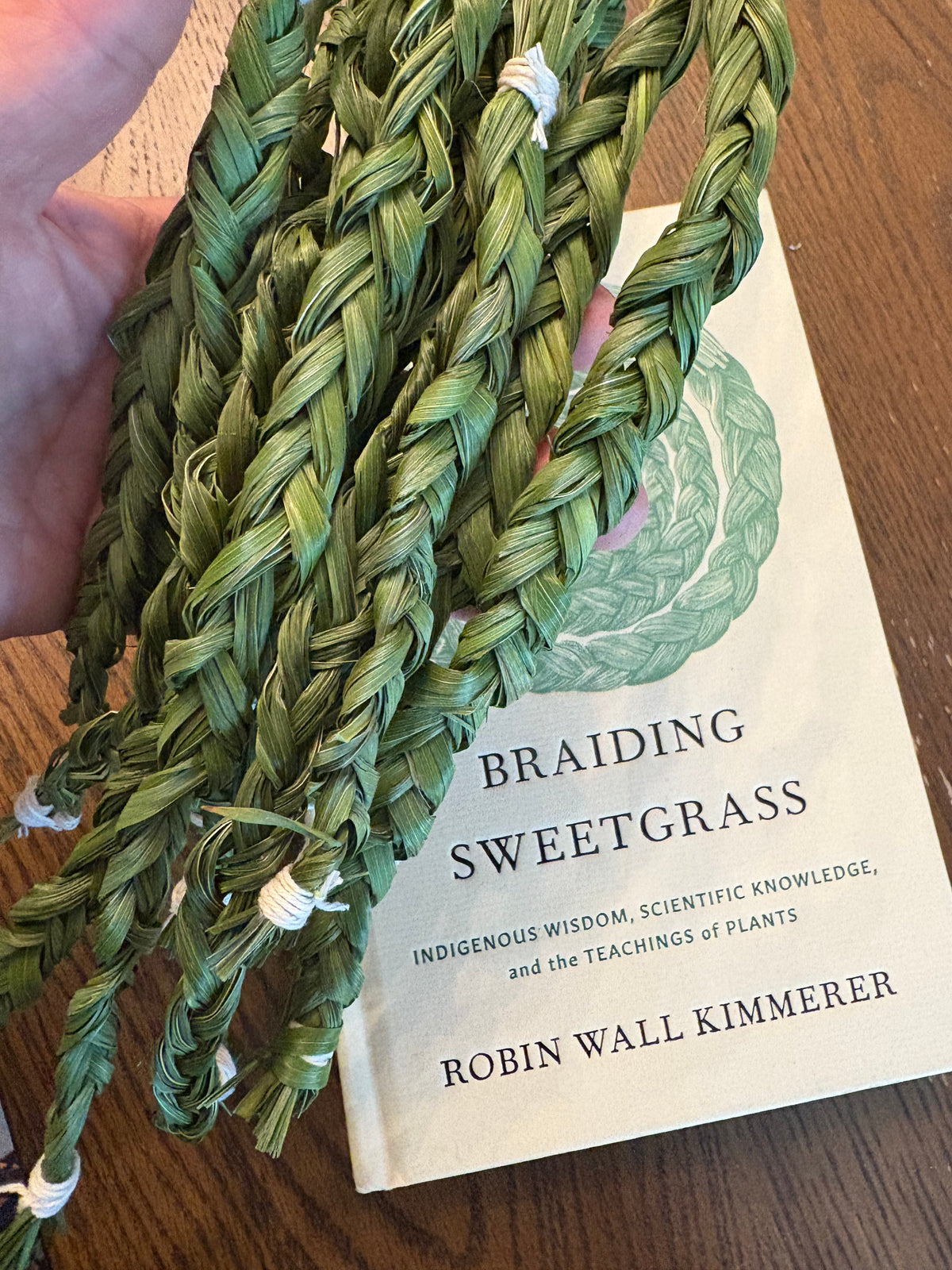
Handcrafted Braided Sweetgrass
Handcrafted Braided Sweetgrass
Couldn't load pickup availability
Share
Traditional 21 Strand Braid
Sweetgrass is a fragrant plant with deep cultural and spiritual significance to many Indigenous peoples. Native to the North East region, sweetgrass has long been gathered and used in ceremonies and spiritual practices by Indigenous communities whose ancestral lands we live on today.
I am personally inspired by the book Braiding Sweetgrass by Robin Wall Kimmerer and its teachings about our relationship with the natural world, reciprocity, and gratitude for the gifts the Earth provides. I feel honored to live on land that has been cared for by Indigenous peoples for generations, and I approach growing and harvesting sweetgrass with appreciation for the plant and the land it grows upon.
Each braid is grown, harvested, and carefully braided by hand by me, using the 21-strand method.
The 21 strands hold a special meaning representing the seven generations before us, who cared for the land and passed their teachings on to us. Seven generations after us, for whom we have a responsibility to care for the land; and the seven sacred teachings of Love, Humility, Truth, Respect, Honesty, Courage, and Wisdom. These teachings are a reminder of our connection to one another, to those who came before us, and to those who will come after us.
Ways to enjoy your sweetgrass:
-
Smoke cleansing: Burn a small portion as part of a personal practice of cleansing your space and setting positive intentions.
-
Altar or sacred space: Place the braid on an altar as a way to honor your ancestors, express gratitude, or reflect on your connection to Mother Earth.
-
Natural fragrance: Keep your braid nearby to enjoy its naturally sweet, gentle aroma and bring a little piece of the natural world into your home.
Each braid is unique, shaped by the grass itself and the care taken in growing, harvesting, and braiding it.
Grown with care. Harvested with gratitude. Braided by hand.
Land Acknowledgment
I acknowledge that I live and grow sweetgrass on the traditional, ancestral, and unceded homelands of the Pocumtuc and Woronoco (Woronoke) peoples, with close cultural and regional ties to the Nonotuck and wider Algonquian nations.
I am grateful for the Indigenous peoples who have cared for this land since time immemorial, and I recognize that their relationships with the land, plants, and waters continue today. I offer this acknowledgment with respect and gratitude as I continue learning about the land I call home.